
Commonly occurring in individuals with dementia or cognitive decline, the desire to “go home” or leave is a hallmark behaviour that occurs mostly in the middle to late stages of dementia.
Key aspects of disorientation in cognitive decline are: Temporal– difficulty remembering the time of day, day of week or season. Spatial– getting lost in familiar places or having difficulty navigating well-known environments. Contextual–mixing up life stages such as believing adult children are still in school or living at home when they are adults. And, last but not least, delirium, dehydration, infection, pain or medication side effects can influence confusion or disorientation.
For people living with Alzheimer’s disease and other dementias, wandering is a common behaviour. As a result, people living with dementia may not be able to find their way back home and become lost. For caregivers, wandering can lead to stress as well as safety concerns.
Wandering is a direct result of physical changes in the brain and:
• Is more common in the middle or later stages of dementia, although it can occur at any point during the disease.
• Can cause a person with dementia to become confused and disoriented, even when they are in a familiar place.
• May occur at any time of the day or night.
• May lead the person with dementia outdoors, which can expose them to dangers such as traffic or dangerous weather conditions.
• May occur on foot, by car or public transportation.
Whether or not a person living with dementia wanders, it is a good idea to take proactive steps to understand this particular behaviour and reduce the risk of the person becoming lost.
Reasons for wandering
Figuring out why a person living with dementia wanders can be difficult. Every person living with dementia is unique; however, there are some common reasons:
• The person may be too hot or too cold.
• The person may be agitated due to medication side-effects, too much noise, or other forms of over-stimulation.
• They may be experiencing delusions and hallucinations due to dementia or medication side-effects.
• They may be in discomfort. For example, the person may be hungry, in pain, or may need to use the toilet.
• They may be bored and be seeking stimulation.
• They may not have enough of an outlet for their energy.
• Restlessness or changing sleep patterns can lead to confusion between night and day.
• They may be experiencing a common phenomenon called sundowning – read more about sundowning here.
• The person may believe they need to leave the house in order to go to work, or take care of their children.
• The person may be continuing a long-standing habit. For example, perhaps the person has always enjoyed long walks.
• New environments may increase disorientation. Moving to a new neighbourhood or a new home may increase someone’s risk of wandering.
• They may not recognize their own home and may want to go somewhere that is more familiar
Wanting to go home
It’s very common for people living with dementia to become fixated on wanting to “go home” – even when they are home. This can be very stressful, both for the person and for the caregiver. Often, this is a phase that will eventually pass, but in the meantime, caregivers will need to find coping strategies that are both creative and tactful.
The reason for wanting to go home varies from person to person. Understanding the root reason for people wanting to go home can help you to manage this behaviour.
Possible reasons for wanting to go home:
• They may be unable to recognize their current home.
• They may have recently moved to an unfamiliar place.
• They may be depressed.
• They may want to go to a childhood home or see a loved one from the past.
• “Home” might mean a time when life was more comfortable.
Coping strategies
• Try to determine the emotion being expressed (anxiety, fear, insecurity) and respond to that (“I’ll take care of you” or “Are you feeling lonely?”).
• Try to determine why the person expresses the need to go home.
• Remove objects that might be reminding the person to go home (coats, hats, purses).
• Distract or redirect the person’s attention to a different activity. Try looking at photos and reminiscing together or going for a walk.
• Try not to contradict the person’s wish to go home, instead reassure the person.
• Give the person a reason to stay longer. For example, offer them a cup of tea or their favourite dessert.
Reducing the risk of wandering
No one thing is going to prevent a person living with dementia from wandering. Multiple strategies are recommended to reduce the risk.
When it is at all possible, it is important to find solutions that honour the person’s independence and freedom. The precautions you take will depend on what is appropriate for the individual you are caring for, as well as the features of the person’s physical environment. For example, what will work for someone who lives in a small town may not be suitable for someone in a large urban centre.
• Keep a diary of when and where the person tends to wander. Look for a pattern – this may give you clues as to what is triggering the behaviour.
• Keep objects out of view that are associated with the outdoors (car keys, jackets, shoes).
• Re-locate door locks above eye level or where the person can’t see them.
• Try disguising doors by decorating or covering them with posters, wall hangings or mirrors.
• Consider alarms which will alert you when a door or window has been opened.
• Consider door mats that set off an alarm when stepped on.
• Anticipate the times the person may wander, or has wandered before like approaching nightfall (often associated with sundowning).
• Review the person’s medications with their doctor. It may be possible to switch to drugs which are less likely to cause confusion or delusions. As a last resort prescription medications may be appropriate for some people who wander. Speak to their doctor about the options.
• Encourage the person to engage in regular physical activity. This can reduce agitation and provide an outlet for their energy. Walking with a caregiver or a friend, or spending time outside in a secure area may be a safe option for a person who tends to wander.
• Tell neighbours, nearby businesses and your local police or RCMP detachment about the situation. They may be able to recognize if your family member appears disoriented and be able to help.
• Keep vital information handy with names, basic information, medications, etc., for use if needed.
If a wandering incident occurs
It’s not easy to remain calm and think clearly when a person living with dementia is lost. Keep in mind that you are not alone and others are there to help. When a person living with dementia goes missing it is an emergency – the most important thing is to not delay your response. The following strategies may be helpful if the person living with dementia wanders away from home:
• Quickly search the vicinity of where the person was last seen.
• Check for car keys, luggage, or other items that may indicate where the person may have gone.
• Contact the police. Dial 9-1-1.
• Notify the police of any locations that the person may wander to, such as a former workplace, previous address or favourite shop.
• If the person may be in a vehicle, share vehicle information with police.
• If the person may be using public transportation, share information about any transit routes they may have used in the past.
• If the person’s credit cards are gone, inform police and consider notifying credit card companies. Tracking credit card use may help to locate the person.
• Alert friends and neighbours to the situation.
• Have someone stay at home in case the person returns.
• After an emergency situation, some caregivers choose to re-evaluate the person living with dementia’s living situation.
Alzheimer Association of BC.
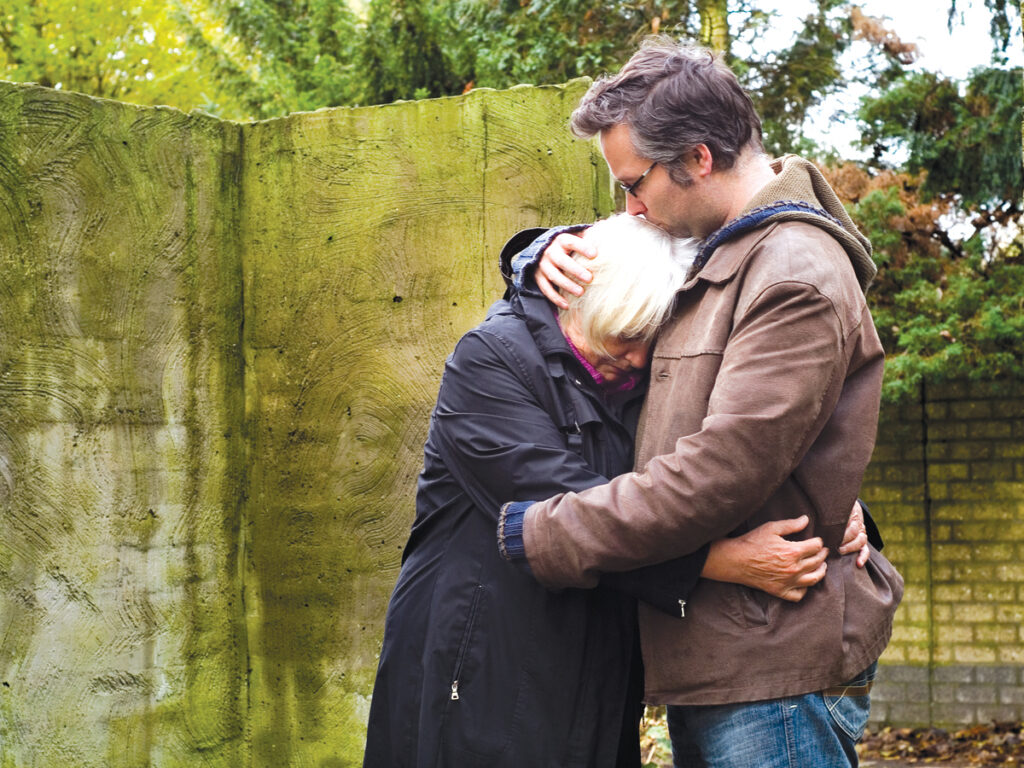
Helping someone who is lost or confused
Research shows that six out of ten people with dementia will go missing at some point in their lives. This often happens without warning and, in many cases, even very familiar surroundings can suddenly become unfamiliar. If you come across someone who seems disoriented, offering calm, appropriate help can make a real difference.
1. The first step: Handle the situation with kindness and clarity. Move slowly and approach the person from the front so avoid startling.
2. Next: Begin with a warm introduction: tell them your name and ask theirs. Speaking slowly and clearly, using short and simple words, helps reduce stress and makes it easier for the person to process what you are saying. Use gentle gestures and give them plenty of time to answer.
3. Opt for:Yes-or-no questions are especially useful because they are easier to understand and respond to. Maintaining good eye contact and a calm voice tells the person they are safe.
4. Patience is critical: It may take a few moments for the person who is lost or confused to respond. Avoid correcting them or insisting they remember facts they’ve obviously forgotten. Reality checks can increase confusion or frustration rather than help.
5. Other tips: If the person appears lost, check whether they are wearing a MedicAlert Safe and Found bracelet or other identification. These worn identifiers often contain vital information that can help reunite them quickly and safely with their caregiver or family. Helping someone who is lost or confused doesn’t require expertise, it requires gentleness, patience, and clear communication. Your response can provide comfort in a distressing moment and help keep a vulnerable person safe.
6. Emergency services: In situations where you
are unable to help the person get where they need to go, or if they appear at risk, calling the police (911) is the appropriate next step. A missing person with dementia is considered an emergency because of the risks of injury or harm without proper care. Stay with the person until help arrives, continuing to offer reassurance and company.
Source: Finding Your Way Ontario
Photos: iStock.