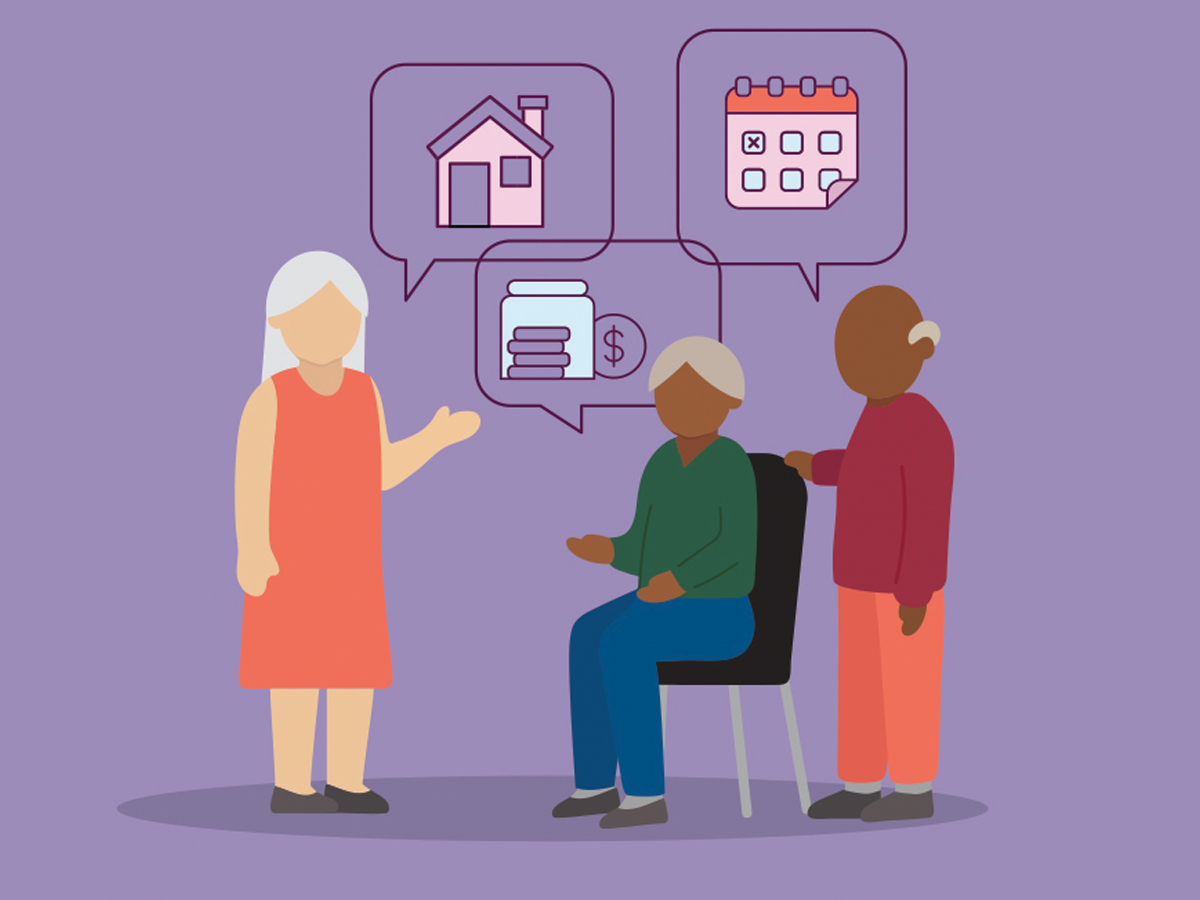
How to handle difficult conversations
Be it at work, at home with family and even in our volunteer activities, the need to bring up an awkward topic with someone can be a dreaded activity. But, handled as an honest, sensitive yet tactful conversation working through things can actually lead to a more supportive, healthy relationships.
Often referred to as ‘the elephant in the room’ a problem that’s avoided or not talked about for fear of confrontation, conflict, or the possibility of making a situation worse, can fester and cause even larger issues.
If the topic for discussion is related to an older adults health and well-being or financial issues, it likely won’t go away. Rather it will continue to cause stress, risk and/or frustration and even anger. Especially when discussing safety issues, health care concerns, driving etc, you may find your family member or friend in denial, being stubborn, refusing to talk about it etc. While there are no guaranteed resolutions it’s important to try and get things resolved in order to move forward. Let’s look at some suggestions/thoughts that may pave your way:
1) Not what it seems: Differences in perception or interpretations are often the root of why conversations can be difficult. And, of course, the feeling that one person is right and the other wrong. Think about Dad’s perspective. He’s afraid of losing his independence. Dad may say he’s been driving all his life and there is nothing to worry about while you are noticing the opposite. Could it be time to discuss alternative methods of transportation?
2) Avoid the blame game: Blame is unproductive, unkind, and unfair because it is only about looking backwards, not forwards to solve the issue. Try not to point fingers as to why a financial mess occurred. Be constructive about
a way forward.
3) Timing is everything: There is no perfect time in the future for difficult conversations. Be sensitive to your timing, who in the family brings up the subject and try not to overwhelm. If possible, pick a place outside in the garden, a coffee shop or a neutral/comfortable place in the house. Expect pushback when you bring up a house move or introducing household help for instance. Be kind, gentle and explain your reasoning and the potential risks of avoiding the situation.
4) Do your research:Jotting down a few keys thoughts or words to help keep you focused yet flexible. If you are talking to an elder, try to bring simple explanations of a few options and ideas.
5) Be mindful: This could be emotional or upsetting. Practice staying calm and be prepared to step away to compose yourself. Allow the other person the same courtesy. A parent may not want to rush into the retirement residence discussion right away. It may take some time for them to feel comfortable to even discuss the concept.
6) Listen to understand: Give the other person a real chance to say how they feel, what is on their mind and how they see the situation. Learn from what you hear and clarify what they need, value and expect. Take the time to really listen to what a loved one is saying and try and see the situation from their viewpoint.
7) Our words matter: Limit what we say. Speak slowly, with a clear, simple purpose while being respectful, compassionate and non-judgmental. Give mum or dad the option of taking a break and coming back to the discussion at a later time, asking questions or not really wanting to participate. Rome wasn’t built in a day. Be patient.
8) Be realistic: Remember that facts, interpretations and opinions are three different things that can get blurred quickly. Often our view of our parent’s situation from afar is exaggerated, incorrect or perhaps more risky than we realized. Make sure you’re on the right track.
9) The “redo”: If the conversation went poorly, see if there is a way to try and start it again. By hitting the “reset button”, you give both of you the opportunity to try and solve the problem again – maybe with some outside assistance. Perhaps say something like: “ I am worried about how we left things, can we try again to figure this out together over the next few days. Perhaps we should chat with—your doctor, the bank, the homecare manager etc.
No matter how the conversation goes, follow up. Anticipate some back and forth, some reluctance, some mind-changes. Often times there are big decisions to be made which may take some time and additional support.
Mary Bart is the chair of Caregiving Matters, an Internet-based charity that offers education and support to family caregivers.
Pre-planning your chat.
Success is no accident. The stakes are too high to wing it, so take the time to think ahead. Ask yourself.
a) Why this conversation have to happen now? Ask yourself…If I don’t raise the issue, can I let it go and move on?
b) What is your goal? Be specific and clear about what you want to achieve and be ready to have a “plan B” or a compromise.
c) Be brave: Remind yourself that you have successfully dealt with other difficult conversations, and you can manage this one too. Don’t let your fears, worries or apprehension hold you back if this is something you really should deal with.
Image: iStock